
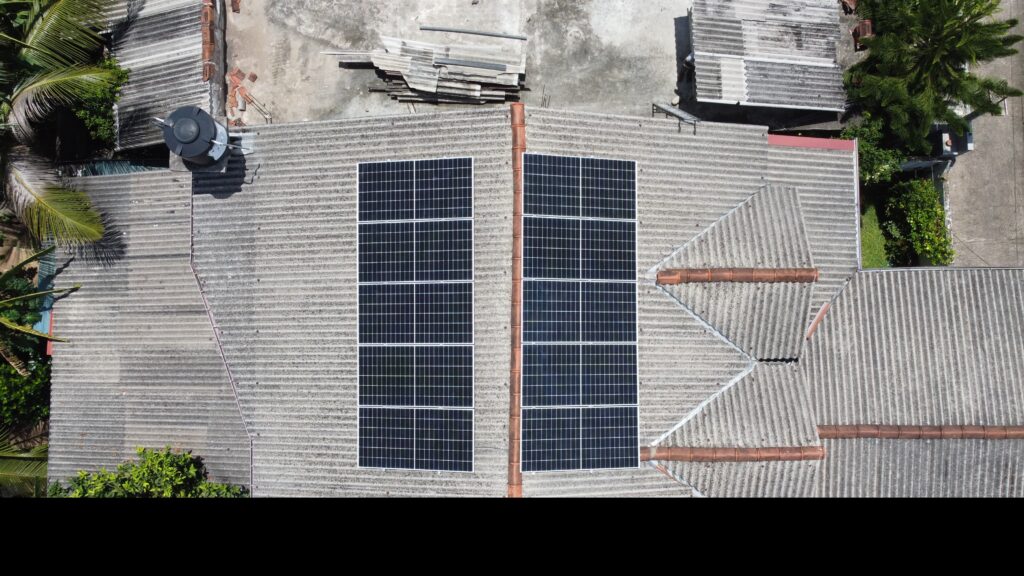
Rooftop solar has become an increasingly attractive investment option over the years. Now, with interest rates on fixed-income instruments such as Fixed Deposits and Government Treasury Bonds on the decline, solar has emerged as a solid alternative.
This guide will cover all the steps involved in setting up solar at your home, choosing the right plan, estimating the potential income you can receive, identifying the barriers you may face, and how to overcome them. So, without further ado, let’s start with the very basics.
How Do You Earn Through Rooftop Solar?
Earning through solar is simple. Essentially, you produce electricity through solar panels, which you can either use or sell to the grid (or both). You get paid based on the number of units you sell. A unit, in this case, is 1 kWh of electricity.
For instance, when I installed solar at my home, the price per unit was Rs. 37, but at the time of writing, it has dropped to Rs. 27 per unit. Even with this reduction, selling 500 units of energy will still net you Rs. 13,500 per month.
Types of Solar Systems Available
Not all solar systems are built the same. In fact, there are three different types of solar systems you can purchase:
1. On-Grid Systems
On-grid solar systems are directly connected to the grid. The solar panels generate power for your home, and any excess power generated is sent back to the grid. You are then paid for the excess power you sell.
However, these systems do not contain energy storage, meaning that whenever the grid goes offline, you have no power and stop generating electricity for that period.
2. Off-Grid Systems
Off-grid systems are the complete opposite of on-grid systems. Your solar system is not connected to the grid at all and powers your entire home independently. These systems come with a large amount of energy storage, ensuring you have power even during countrywide power cuts.
However, since off-grid systems are not connected to the grid, there is no way to earn from them. The trade-off is that you will no longer have an electricity bill.
3. Hybrid Systems
Hybrid systems combine the best of both on-grid and off-grid systems. These are essentially on-grid systems with energy storage. They power your home, store excess energy in batteries, and once the batteries are fully charged, the remaining energy is sold to the grid.
In the event of a power cut, you will still have power as long as your batteries have enough stored energy.
A quick summary of the systems is tabled below:
| Type of System | Can you Earn? | Has Energy Storage | Works During Power Cuts? | Cost (Relative) | Return on Investment (ROI) |
|---|---|---|---|---|---|
| On-Grid | Yes | No | No | Low | High |
| Hybrid | Yes | Yes | Yes (If batteries have charge) | Medium | Medium |
| Off-Grid | No | Yes | Yes | High | Low |
Choosing the Right Solar System for You
The best system for you depends on your needs:
- Off-Grid Systems: Are you someone who’s sick of power cuts , the constant price revisions and the “random monthly maintenance” cuts? Go with an off-grid solution to be completely independent. However, these systems do not generate income and require significant battery storage, making them expensive. ROI is lower, making it suitable for a niche set of people who prioritize reliability and independance over earnings.
- On-Grid Systems: Perfect for those looking to earn from solar. These have the lowest cost among the three systems since they lack energy storage, allowing for larger kW systems that generate and sell more electricity. On-grid systems have the highest ROI and pay for themselves within or below five years. However, they rely on the grid, meaning no power or earnings during outages.
- Hybrid Systems: A middle ground between on-grid and off-grid. They provide partial independence from power cuts while still allowing you to earn. Hybrid systems are more expensive due to battery storage, resulting in a longer ROI, but they ensure power availability during outages (as long as batteries are charged)
Now that you have a better idea of which system suits you best, let’s move on to the different earning plans available. From this point onward, the content will focus only on on-grid and hybrid systems, as these are the only two options that allow you to earn.
The Different Connection Schemes Provided by the CEB
At the moment, there are three connection schemes you can sign up for with the CEB to earn through solar. They are as follows:
1. Net Accounting
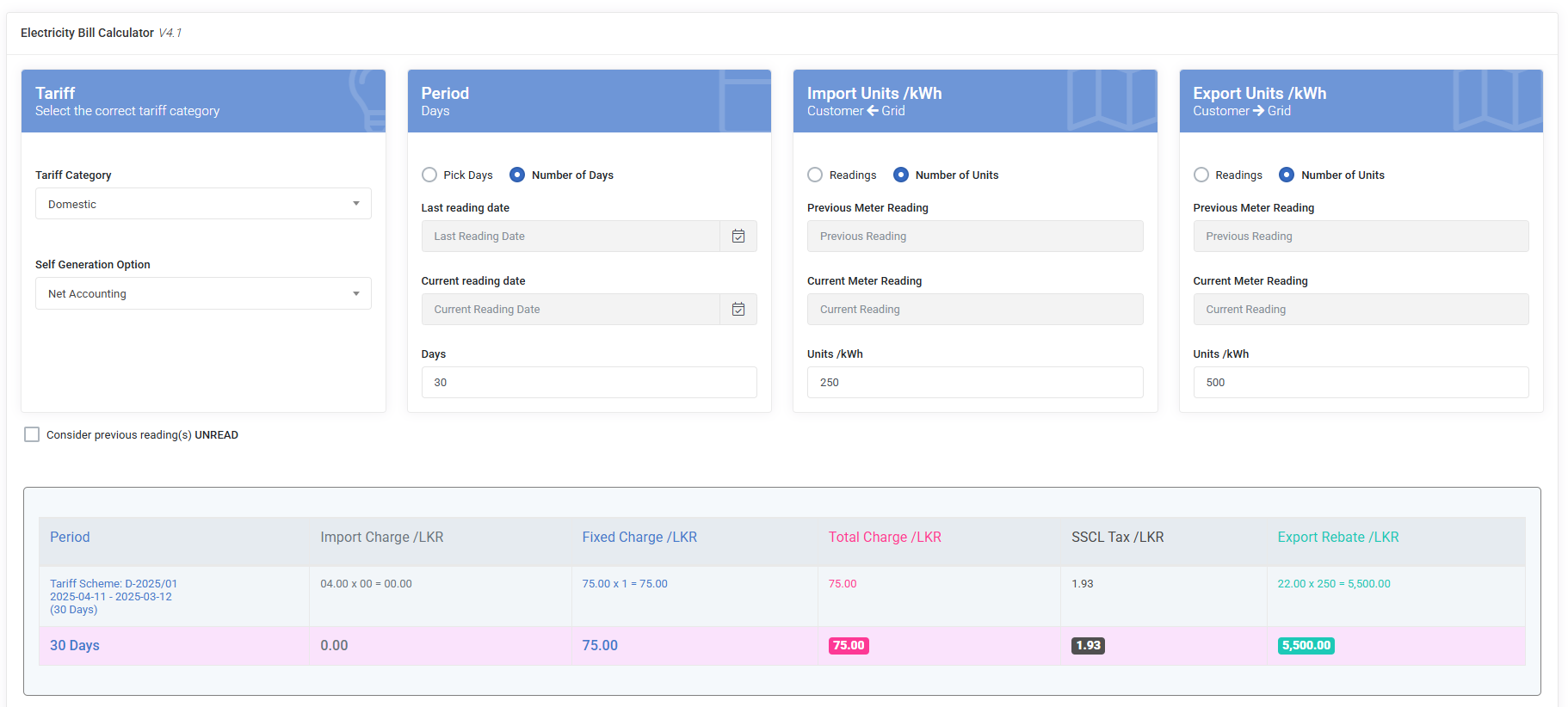
The Net Accounting scheme allows you to both use the units you produce for your house and sell any excess units. This is by far the best plan for most individuals looking to earn through solar. The amount you get paid depends on the tariff rate at the time and the type of contract you sign (more on this in the next section).
*The CEB Bill calculator site is bugged. I can confirm at the time of writing (13/03/2025) that the current export rate is 27 Rs per unit
2. Net Metering
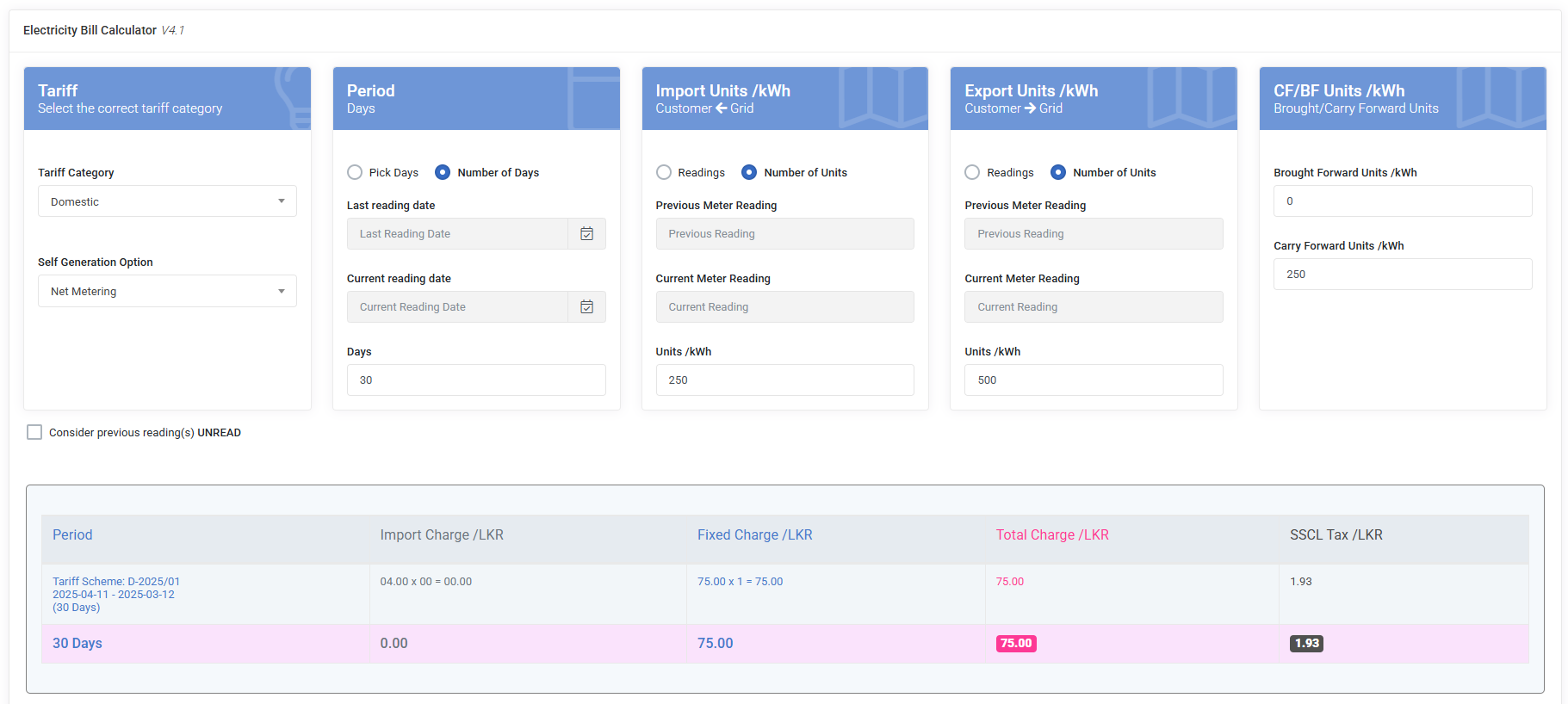
Net Metering is similar to Net Accounting, except instead of getting paid for your excess units, they are carried over to the next billing cycle. For example, say you produce 500 units in a particular month, but your bill amounts to 300 units. This means you have 200 excess units. These 200 units will then be moved to the next month. Assuming you produce 450 units the following month, you will now have a total of 650 units available. These excess units will remain for up to 10 years until you use them.
3. Net Plus
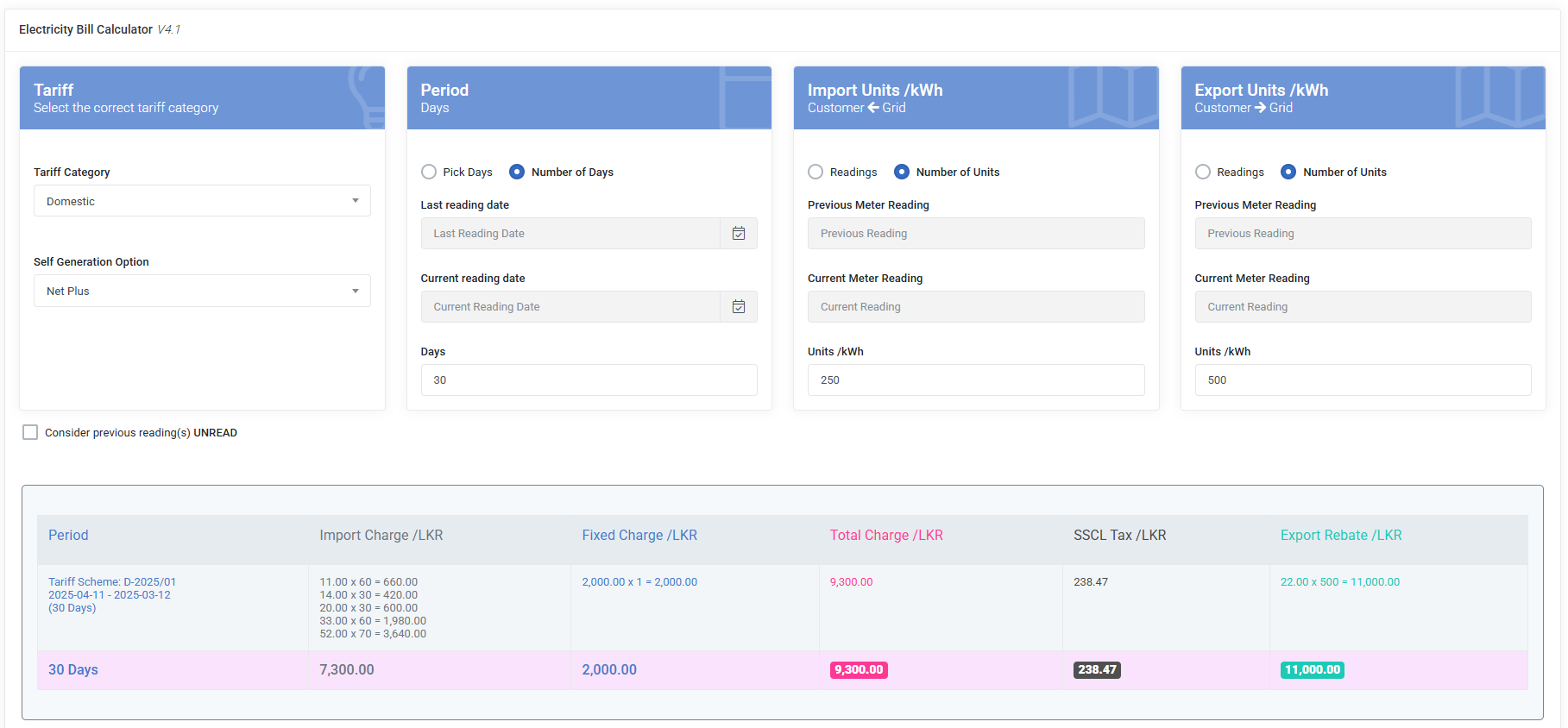
The Net Plus scheme allows users to sell all of the electricity they produce to the grid without using any for their own house. In this case, they would have to cover their own electricity bill separately, and they would be paid for the total amount they export each month. This plan is viable, but for individuals with high electricity bills, it may not be the most efficient option. This is because electricity bills increase exponentially with the number of units consumed. It is much better to offset these costs with the units you produce, as the pricing structure for self-consumed electricity is linear.
I have illustrated an example of the three schemes below.
Quick Summary and the Final Verdict on Connection Schemes
| Scheme | Units Produced | Units Consumed | Electricity Bill (with tax) | Amount Earned From Exporting | Net Earnings |
|---|---|---|---|---|---|
| Net Accounting | 500 | 250 | 76.93 Rs | 6750 Rs | 6673.07 Rs |
| Net Metering | 500 | 250 | 76.93 Rs | 0 Rs | 0 Rs |
| Net Plus | 500 | 250 | 9538.47Rs | 13500 Rs | 3961.53 Rs |
Before I get started on the summary, there’s a couple things I want you to note:
- The images above are from the official CEB Electricity Bill Calculator. Go check it out! It’s pretty neat!
- CEB calculator currently shows the unit rate for exports as Rs. 22. However, the actual rate at the moment is Rs. 27. That said, how long it will stay at this rate is uncertain. For more information regarding the future of the export rate click here.
Now for the verdict-
As you can see from the example above, Net Accounting has the highest profit-making potential and the least risk when electricity tariffs increase.
That’s why I recommend this plan to the vast majority of people out there.
Net Plus might work better for individuals like landlords who rent out homes. This way, they can earn from the free rooftop space they have while letting their tenants pay the electricity bill as usual.
There is also a plan called Net Plus Plus. It’s very similar to Net Plus, and I’m not sure if it’s even offered anymore. Either way as a TLDR it essentially treats your system as a power plant and allows you to expand solar production beyond the contract range. (In the previous plans, you agree to a certain kW system with CEB and are allowed to produce units within that range.)
The Net Plus Plus plan is designed to maximize power generation, but it comes with the same pitfalls as the Net Plus scheme. If you want more details about it, check out this link: PUCSL – Rooftop Solar PV Connection Schemes.
Now that you have a solid understanding of the rooftop schemes, let’s move on to discussing export rates and contracts.
Export Tariff Rates for Solar
As of now, there are two schemes available for exporting solar power to the grid. They are as follows:
1. The Fixed Tariff Scheme
This is a fixed contract for a period of 20 years. As of writing (03/13/2025), the fixed rate is Rs. 27 per unit. For the vast majority of users, this fixed-rate scheme is the way to go, as it provides stable, predictable income for the next two decades.
This rate was previously at Rs. 37 per unit, but it was silently reduced last year, despite objections from the PUCSL. Before that, the rate was a measly Rs. 22 per unit for the first seven years and then Rs. 13 per unit for the next 13 years.
As you can see, the fixed tariff scheme fluctuates depending on various circumstances, so it’s crucial to lock in a contract when the rate is favorable. The current Rs. 27 per unit is quite reasonable, especially since the initial cost of solar installations has come down. If you’re considering getting into solar, I recommend doing so quickly to secure this price for the next 20 years.
There is also a price difference for systems greater than 500 kW and for aggregation schemes. These are detailed in the table below (data courtesy of the CEB).
| Capacity Range (kW, AC) | Up to 500 kW | More than 500 kW | Aggregation Schemes |
|---|---|---|---|
| Applicable Tariff | 27.06 | 23.18 | 23.18 |
For those of you who already have solar, there’s a possibility to upgrade your solar capacity while keeping the Rs. 37 per unit rate—I’m currently in the process of doing this, and I’ve documented the steps here.
2. The Variable Tariff Scheme
The Variable Tariff Scheme is a relatively new plan introduced in 2023. However, according to this CEB document , it’s only available for new users in 2024. A snippet of the document is attached below.
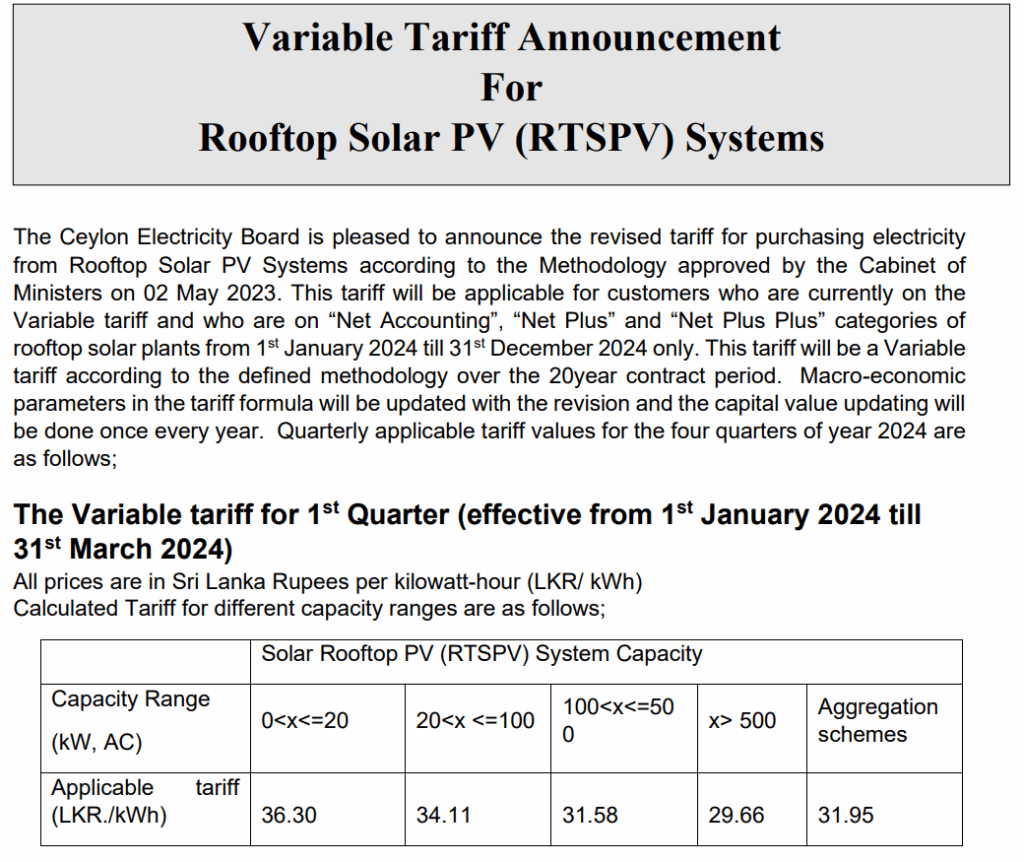
This scheme was designed to incentivize solar adoption through loans. The idea was that the higher initial payout would help cover loan payments, after which the rate would be gradually reduced.
Since I’m fairly confident that this plan isn’t available at the moment, I won’t go into too much detail. If you’re interested, I recommend reaching out to your solar panel provider for the most up-to-date information.
That said, this scheme is only beneficial for people who need financing to install solar. If you can afford to directly purchase the system, the Fixed Tariff Scheme is almost always the better option.
Now that we have a full understanding of the systems, schemes, and payout plans available for rooftop solar, we can finally dive into my favorite part of all this—choosing the perfect solar system.
Choosing the perfect solar system foy your house
To start off, I want to make one thing clear—all solar-based systems are profitable (at least under the current Rs. 27 per unit scheme). However, the real difference comes down to how much power you use in your household.
So, take a moment to look back at your electricity bills over the past few months—ideally, for the entire year. Check how many units you’ve imported each month and calculate the rough average for the year. Now, compare that value with the chart below to see which solar system best fits your consumption needs.
The table below shows the average monthly production of the most popular solar system sizes, ranging from 2 kW to 40 kW.
| Solar System Capacity | Average Units Produced per Month |
|---|---|
| 2 kW | 240 Units |
| 3 kW | 360 Units |
| 4 kW | 480 Units |
| 5 kW | 600 Units |
| 8 kW | 900 Units |
| 10 kW | 1100 Units |
| 15 kW | 1600 Units |
| 20 kW | 2100 Units |
| 30 kW | 3600 Units |
| 40 kW | 4500 Units |
Now, these values aren’t set in stone. Several factors affect your actual production, including:
✅ Cloud cover
✅ Location & surroundings
✅ Panel efficiency
I’ve also used the lower range of what each system typically produces. Larger systems tend to have greater variations in production, so their accuracy will fluctuate more. By now, you probably have a rough idea of which system would cover your import usage. However, my advice?
Get a system one grade or even better – several grades higher.
Why? There are a few key reasons:
1️⃣ Your consumption will increase once you get solar – Having the peace of mind that you won’t have to pay electricity bills actually makes most people use more power freely. (Our import usage went up by a whopping 150 units)
2️⃣ Future-proofing – A higher-capacity system will let you add more appliances later without worry. Take a 1-ton AC as an example. Adding one would increase your usage by at least 150 units per month. Having a higher capacity system allows you to make upgrades stress-free.
3️⃣ Locking in a solid export rate – The export rate could go up or down, locking in a higher capacity system while it’s at 27 Rs may save you millions in the years to come.
4️⃣ Faster ROI (Return on Investment) – Larger systems generate more energy, meaning you recover your investment faster compared to smaller systems. Also note that if your solar system just covers your bill, the ROI is very mediocre.
The Best System for the common Household
For those consuming 250 to 350 units per month, I strongly recommend getting a 5 kW system or higher. This way, you can eliminate your electricity bill and still earn extra from excess units.
Tax benefits and Technical Details of Solar
To wrap up this guide, let me go over some technical details regarding solar and also touch upon the tax break you are eligible to use.
- When I installed solar back in 2023, the entire process form contacting the Solar panel provider , to approvals and clearance and finally to the installation took about 1.5 months. We initially contacted the panel supplier in the first week of May, and the system was done installing by June 15th. The installing process itself took only a single day (this was a 5.5 kW on-grid system). The longest factor is the approval process by the CEB. This timeline may defer now as it has been two years.
- Even after setting up the system, it took us about 3 months to get paid. Our first paycheck arrived in September (covering the months from June to August). This is standard procedure and we got paid on the dot each month after that.
- Tax advice isn’t exactly my forte but I believe you can get up to a maximum of Rs 600 ,000 tax write off from solar. I believe this is only for On-Grid systems however. For further information please refer to domains such as this. https://www.taxadvisor.lk/notice/index/id/307 .
- For those wondering about maintenance cost – well we got free services for the first five years. But I was told that servicing would cost less than 8K per year. Also it’s not compulsory to do so every year according to my panel provider. I was adviced to just track our production. If there are any noticeable drops – that means its time for maintenance.
Well that brings an end to this guide on solar systems . I’ve also decided to provide you with raw data from our solar system over the last two years including stuff like how much we produced , our electricity bills we saved , how much the system costs and our returns so far. I highly recommend you take a look at that so that you can get a solid idea of what you can expect from implementing a solar system.
I hope this blog series helps you in making your decision regarding solar .
Pingback: Real Earnings & Payback of a 5 kW Solar System in Sri Lanka