
Interest Rates Explained: What Sri Lankan Investors Need to Know About Inflation and Markets
Everything from your loan repayment to grocery items are influenced by the interest rates. They determine the return an investor can reasonably expect from an investment.
TL;DR
- High rates shift capital from equities to bonds, cutting valuations
- Prolonged tightening risks deflation and market downturns
- Rate cuts boost borrowing, profits, and stock market sentiment
- Overly low rates can spark bubbles and currency weakness
What`s in it for investors?
In any country with a centralized banking system the interest rates originates from the banking system. In the case of Sri Lanka ,the Central bank (CBSL) sets the overnight policy rate .
This policy rate is mainly used by the CBSL to control the rate at which banks can obtain loans or deposit money at the CBSL, creating a corridor within which banks can lend and obtain short term loans from other banks as illustrated below.
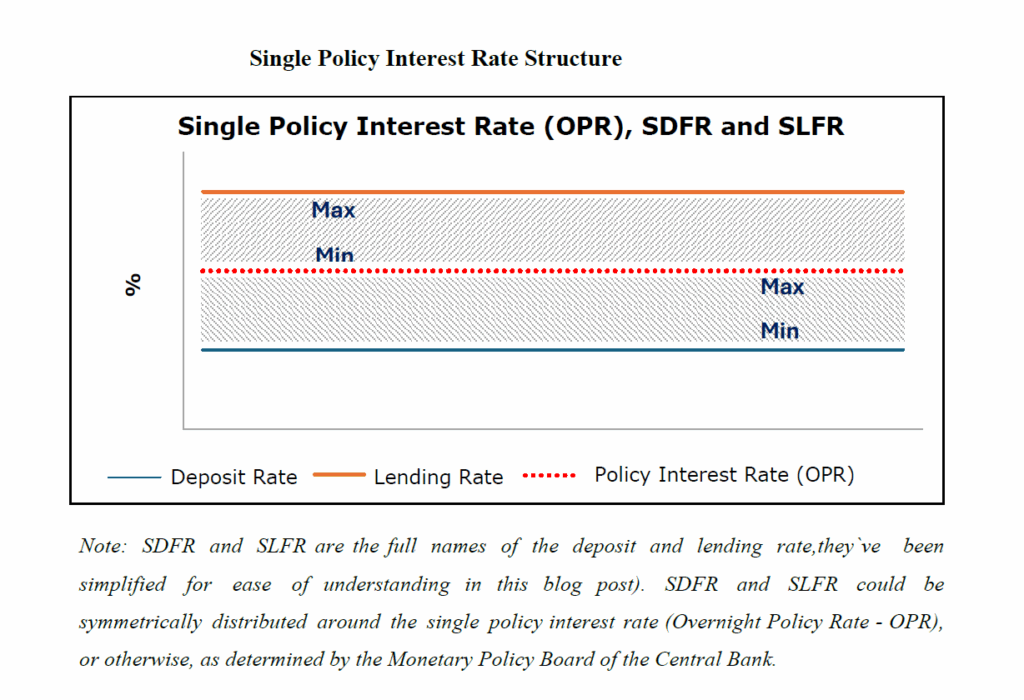
During periods of high inflation, the CBSL can raise the interest rates and thereby discourage inter-bank lending. Because of the high rate the banks will try to protect their liquidity by taking a conservative stance when lending money to its customers. This includes both institutions and individuals.
This will in-effect decrease inflation as high borrowing costs will discourage credit money creation. Thereby, reducing the supply of money in the economy. Inflation occurs when too much money chases too few goods, so by raising rates, the CBSL is working to curb inflation.
A continuous cycle of increasing rates would signal investors to reduce equity exposure and take positions in fixed income securities. Furthermore a period of inflation is a highly volatile period for equities as inflation reduces the purchasing power of consumers which is reflected in the earnings of the listed companies.
Investors could also rebalance their portfolios to include defensive stocks such as tobacco ,utilities ,healthcare ,food & beverages.
What happens when interest rates are too high for too long
When interest rates remain too high for an extended period, borrowing becomes expensive, discouraging both consumer spending and business investment. As demand falls, price levels may decline, leading to deflation—a sustained drop in the general price level.
Deflation squeezes business profit margins, as revenues fall but many costs remain fixed. Companies may respond with cost-cutting measures, including mass layoffs, which push unemployment higher. This further reduces consumer spending, creating a negative feedback loop that can deepen the economic downturn. In severe cases, prolonged high rates can lead to a recession or even a deflationary spiral, where falling prices and incomes reinforce each other. Most central banks deal with this through one measure:
Money Printing aka rate cuts
When the CBSL decides the economy needs to be simulated by expanding the money supply it will cut policy rates, which will encourage borrowing, allowing companies to borrow capital more easily and expand their businesses.
Because of this expansion of credit, inflation will increase. This rise in prices will contribute directly to companies to increase their profit margins.
These attractive earnings will attract buy sentiment in the stock market therefore investors will liquidate their fixed income holdings and increase allocation to equities.
Why not keep low rates forever
Remember 2022? A prolonged period of low interest rates and aggressive money printing can overheat the economy as too much money chase too few goods.
Inflation can spiral uncontrollably, leading to currency depreciation, assetbubbles, and economic instability.
Key Investor Takeaway
An investor should diligently pay attention to policy rates and rebalance portfolios, hedge risks, and capitalize on emerging opportunities.
